Everything on a jobsite waits for power. Concrete can't go down until the conduit's in the ground. Buildings can't be energized until the utility ties in, and a parking lot that nobody can light after dark is a building nobody wants to lease. Developers and site contractors bring Blueprint Electric in for commercial site electrical and underground infrastructure work in and around Leesburg, FL, because the underground portion sets the pace for everything built on top of it, and redoing it after the asphalt is down costs a fortune.
Blueprint Electric is a state-certified electrical contractor based in Leesburg, FL, owned and operated by local guys with three decades of combined electrical experience. Our crews handle the site side of commercial projects across the region, including trenching and underground power, conduit and distribution systems, utility coordination and service installation, streetlight and parking-lot lighting, site lighting controls, and full RV park electrical construction. Site development projects of all kinds fall within our range, from retail centers and industrial parks to campgrounds and mixed-use developments. Our permit tech and scheduler keep utility applications, inspections, and county paperwork moving so the underground phase doesn't become the thing holding up your schedule.
Site electrical has a short window. Once the pad is poured and the asphalt's down, anything left in the ground stays where it is, and getting to it means saw-cutting and repaving. That's why underground work has to be right the first time, and why a mistake here costs 10 times as much as the same mistake above grade.
The trouble usually starts with coordination, not with the digging. Site plans are drawn without much thought about where the utility actually wants to bring service. Conduit routes cross paths with storm drains and water lines laid out separately, and nobody submits the utility application early enough to account for a lead time that can run for months. Then the site contractor is ready to backfill, and the electrical isn't in yet, or the transformer pad is sitting in the wrong spot.
Our process starts before the first shovel. A commercial electrician on our team reviews the site plans, coordinates routing with the civil drawings, and submits the utility application early so that transformer and service lead times can run in parallel with the site work rather than after it. Trenching, conduit, pull boxes, transformer pads, and secondary runs all get installed and inspected before backfill, with everything documented so you know exactly what's down there.
The result is a site that keeps moving. Backfill happens on schedule, the building energizes when it's supposed to, the parking lot lights up before the first tenant opens, and nobody's cutting into new pavement to chase something that got missed.
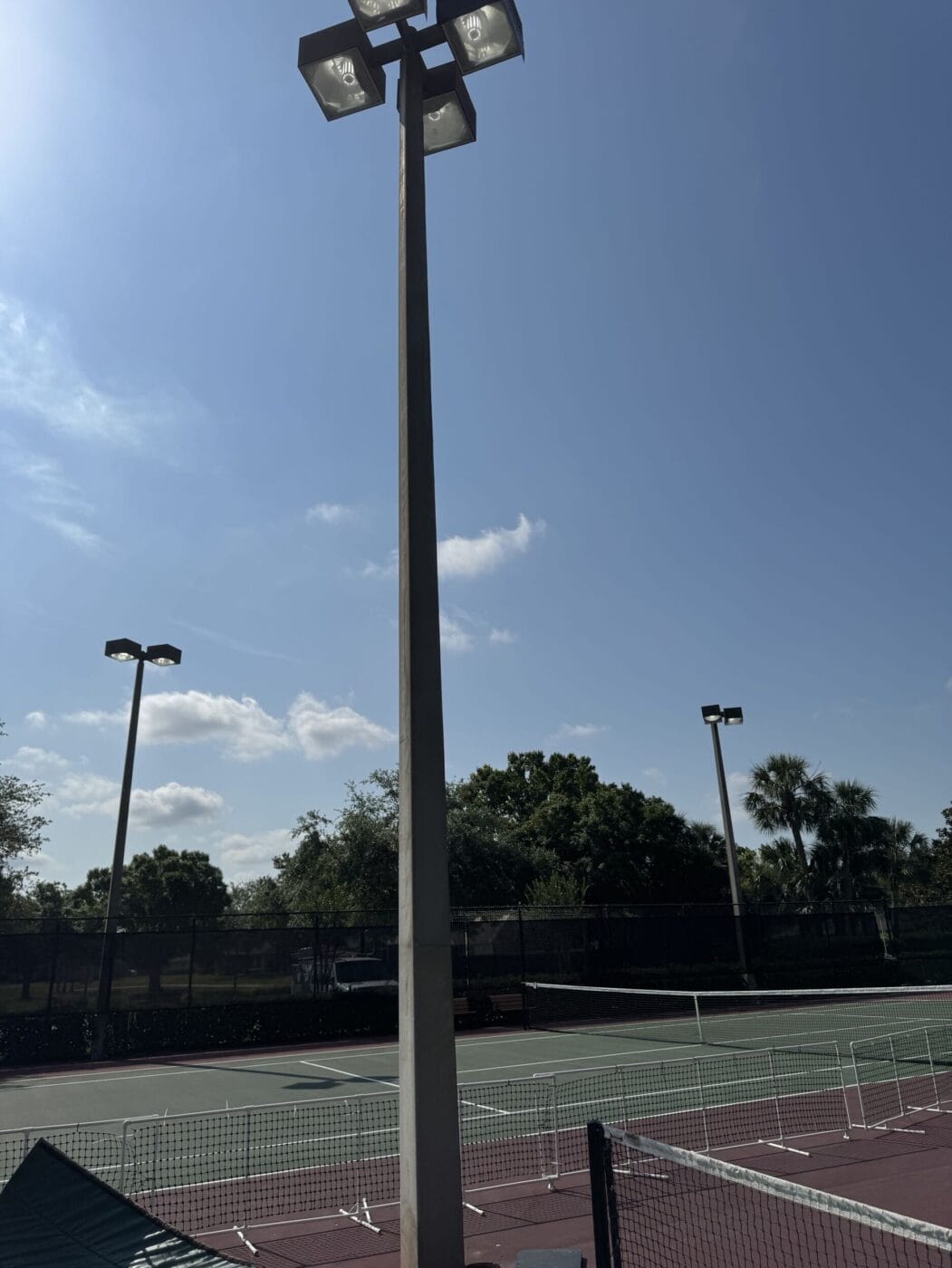
Here's a look at the site and underground work our crews take on across Central Florida.
Full-site projects require a single crew to handle everything from utility connections to the property line. Our scope typically covers the incoming service, distribution to each building or pad, site lighting, signage power, gate and access control feeds, irrigation controls, and electric vehicle (EV) charging infrastructure. Developers get a single point of contact for the entire site rather than managing components across multiple contractors.
Getting power from the utility to where a building needs it starts with a trench cut in the right place at the right depth. Our crews handle excavation, bedding, conduit placement, backfill, and compaction, all in accordance with code and any local jurisdiction requirements for cover. Locating existing utilities before we dig is standard practice, since hitting a fiber line or a water main turns a routine day into an expensive one.
A dark parking lot is a liability and a leasing problem, so lighting layouts are planned around the property's actual traffic patterns. Pole bases, underground feeds, photocell and timer wiring, and fixture installation are all handled by our crew, whether it's a small retail lot or a full commercial development with public street lighting. LED fixtures with the right distribution pattern reduce energy costs while evenly covering the ground.
Campgrounds and RV parks have unique demands, since each site needs its own pedestal with 50-amp, 30-amp, and 20-amp service, and the load calculations across the whole park add up fast. Our crews handle service sizing, underground distribution, transformer coordination, pedestal installation, and lighting for roads and common areas. Park owners planning phased expansions get infrastructure built with room to grow into.
Lighting that runs all night on every fixture wastes a lot of money over the year. Controls like photocells, astronomical timers, contactors, and networked systems let a property light up when it needs to and dial back when it doesn't. Setups are configured based on how the site actually operates, including different schedules for entrances, parking areas, and back-of-house.
Conduit that's sized and routed well makes every future change on the property easier and cheaper. Our approach includes spare conduits and properly placed pull boxes because adding a run later costs almost nothing when the path already exists, but a fortune when it doesn't. Duct banks, feeder routing, and secondary distribution to multiple buildings all fall within this scope.
Dealing with the power company is often the longest lead item on a site, and it's the piece that catches people off guard. Our team manages the application, engineering review, transformer and meter locations, easement coordination, and inspection scheduling with Duke Energy, SECO, or whichever utility serves the property.
The paperwork side of backup power catches a lot of people off guard, since a standby unit involves the county, sometimes the gas company, and an inspection at the end. Generator installation handled by our crew includes all of that coordination, so the only thing you deal with is picking where the unit sits and learning how the weekly self-test works.
Getting an electrician out during the planning stage saves more money than almost anything else you can do on a home project. Residential electrical installations and home upgrades go more smoothly when we review the space before work starts, since moving a circuit on paper costs nothing, while moving one after the fact costs plenty.
Selling a property or refinancing tends to surface panel issues quickly, usually when the clock is tightest. Electrical panel and service upgrades often come down to a fast turnaround, and our scheduler and permit tech are set up to move quickly when an inspection report or a closing date is driving the timeline.
Homeowners often start a remodel thinking about finishes and end up needing to talk about load. Remodeling and renovation electrical is where our crew maps the new layout against what the panel can actually support, then handles the rewiring, added circuits, and any service work the plan requires before the drywall goes back up.
Older buildings around here still run fluorescent tubes and ballasts that cost a fortune to keep lit and fail one fixture at a time. A lighting installation for a retrofit swaps in LEDs with better output and a fraction of the draw, and the energy savings usually cover a good chunk of the job over a few years.
There's a real difference between an inconvenience and a hazard, and knowing which one you've got is worth a phone call. Our electrical repair visits start with an honest assessment of urgency, so you'll hear whether something can wait until next week or if we need to shut off a circuit right now.
Most business owners don't need an electrician to explain code—they need one who understands that every hour a space sits down costs money. Our commercial electrical services are built around your operating hours, with after-hours and phased work so your doors stay open while the wiring gets sorted out.
Low voltage is the piece homeowners forget until the walls are closed and the data drops are missing. Rough-in for network, security, audio, cameras, and automation happens alongside the power in our residential new construction jobs, so the smart home features on the plan actually work when the house is finished.
Coordination with the other trades decides how smoothly a rough-in goes, since conduit, ductwork, and plumbing all want the same space above the ceiling. Our commercial new construction crews sequence around mechanical and plumbing rather than racing them, which keeps the ceiling grid on schedule and saves everybody from having to tear work back out.
Occupancy type drives more of the electrical code than most people expect, so turning a retail space into a restaurant or an office into a medical suite changes the rules mid-project. Handling commercial tenant build-outs and renovations means our crew focuses on where a space is headed rather than where it's been, which helps prevent a change-of-use job from being stopped by an inspector halfway through.
Site contractors and developers around Central Florida keep coming back to us, and here's what tends to earn it.
Licensed electricians, apprentices, and a permit tech who handles the county mean the whole job runs in-house instead of getting handed around.
Financing allows owners to spread the cost of site infrastructure, and military members receive a discount on their projects.
As-builts and photos of what went into the ground are handed over at the end, which pays off the first time someone needs to add a circuit or find a pull box.
Bring us the civil drawings, and we'll walk the routing, price the scope, and flag conflicts before they cost you anything.
Our crews get in and out on the site contractor's schedule, so nobody's waiting on us to finish before the dirt goes back in.
Years of submitting applications and coordinating with local power providers mean we know what they want and how long it takes.
Adding underground electrical after paving means saw-cutting, boring, or trenching through finished surfaces, which costs several times as much as the same work before the asphalt goes down. Directional boring can sometimes install a conduit under a parking lot without tearing it up, though it has its own limitations and costs. Planning the underground scope early, including spare conduits for future needs, avoids the whole problem.
Burial depth in Florida follows the National Electrical Code and depends on what's in the ground and what's on top of it, generally running 18–24 inches for conduit under most conditions and deeper under roadways. Local jurisdictions and the serving utility sometimes require more than the code minimum. Having the depths verified during inspection before backfilling keeps you from having to dig it all back up.
Utility applications, engineering review, and transformer delivery typically take two to six months in Central Florida and can take longer during busy construction cycles or after storm season. Duke Energy, SECO, and the municipal utilities each have their own process and queue. Submitting the application at the very start of a project lets that clock run alongside the site work rather than after it.
Site electrical covers everything outside the building envelope, including trenching, underground conduit and duct banks, transformer pads, service entrance, distribution to each building, parking lot and street lighting, signage power, gate and irrigation feeds, and electric vehicle (EV) charging infrastructure. Lighting controls and photocells usually fall under the same scope. Most of this work must be completed and inspected before paving, placing it early on the critical path.
Adequate parking lot lighting reduces liability, deters problems after dark, and is often required by local development codes and insurance policies. Central Florida gets dark early in winter and sees heavy afternoon rain much of the year, both of which make lighting coverage more than a cosmetic detail. Well-designed LED layouts with proper controls also reduce energy costs compared to older fixtures that still light many lots around here.
FAQs reviewed by Shae Arce, owner of Blueprint Electric, a licensed and certified electrician in Leesburg, FL.
Send over the site plans or call 352-933-2732, and we'll talk through the underground scope, the utility timeline, and what it takes to keep your schedule intact.
Address: Leesburg, FL 34748
Phone: 352-933-2732
Business Hours:
Mon - Sat: 7:00 AM to 5:00 PM
Sun: Closed